Texts and books
Maecenas sed diam eget risus varius blandit sit amet non magna. Etiam porta sem malesuada magna mollis euismod. Vivamus sagittis lacus vel augue laoreet rutrum faucibus dolor auctor. Duis mollis, est non commodo luctus, nisi erat porttitor ligula, eget lacinia odio sem nec elit. Cum sociis natoque penatibus et magnis dis parturient montes, nascetur ridiculus mus.
Gondeln – Zwischenräume und Übergänge (2026)
KIAF - Seoul
Die Gondeln in den Arbeiten von Christine Gallmetzer markieren Übergänge – zwischen Orten, Zuständen und Bewusstseinsräumen.
Sie schweben zwischen Aufbruch und Ankunft, zwischen Innen und Außen, Nähe und Distanz. Ihr eigentlicher Ort ist nicht das Ziel, sondern der Moment des Dazwischen. Gerade dort eröffnet sich ein Bildraum, in dem Wahrnehmung, Erinnerung und Imagination ineinander übergehen.
Die Kabinen erscheinen vertraut und zugleich entrückt. Ihre Fenster reflektieren nicht nur Licht, sondern erzeugen eine eigene Atmosphäre. Das Licht scheint aus ihrem Inneren zu kommen und verwandelt die Gondeln in fragile Orte der Möglichkeit. Sie wirken wie schwebende Denk- oder Erfahrungsräume, deren Bedeutung sich erst im Blick der Betrachtenden entfaltet.
Die Malerei beschreibt dabei keinen konkreten Landschaftsraum. Der eigentliche Raum entsteht zwischen Bild und Betrachtenden. Die physische Präsenz der Werke verbindet sich mit einem imaginären Raum, der sich jeder eindeutigen Erzählung entzieht und stattdessen Offenheit zulässt.
In einer Zeit, die von Geschwindigkeit, Orientierung und Eindeutigkeit geprägt ist, behaupten diese Arbeiten den Wert des Übergangs. Sie verstehen Schwebezustände nicht als Unsicherheit, sondern als zutiefst menschlicher Zustand.
Die Gondeln werden so zu Metaphern einer existenziellen Erfahrung: Nicht das Ankommen steht im Mittelpunkt, sondern die Bewegung zwischen den vermeintlichen Gewissheiten.
Cable Car Cabins – Spaces of Transition (2026)
KIAF - Seoul
The cabins in Christine Gallmetzer's paintings function as metaphors for transition—between places, states of being, and modes of perception.
Suspended between departure and arrival, interior and exterior, presence and absence, they occupy a space of becoming rather than a destination. It is within this in-between state that the paintings unfold their poetic and psychological resonance.
The cabins appear both familiar and strangely detached. Their luminous windows do not simply reflect light; they seem to emit it from within, transforming each gondola into a fragile space of possibility. They become vessels of contemplation—places where memory, perception, and imagination intersect.
Rather than depicting a specific landscape, Gallmetzer constructs an experiential pictorial space. The essential space emerges between the artwork and the viewer, where physical presence and inner perception overlap. Meaning remains deliberately open, inviting viewers to complete the work through their own experience.
In an era increasingly defined by speed, certainty, and constant orientation, these paintings reclaim the value of suspension. The moment of transition is not presented as uncertainty to be overcome, but as a deeply human condition.
The cabins ultimately become symbols of an existential journey. Their destination is secondary. What matters is the experience of moving through the open, inhabiting the threshold between what is known and what is yet to be discovered.
Gallmetzer's paintings do not offer narratives or answers. They create reflective spaces in which perception itself becomes the subject of the work.
Einblick, Ausblick, Überblick, Sammlung Würth, Band 5
Three works by Christine Gallmetzer – Großer Springer, Springerin, and Pergamonn – are featured in the latest anthology of the renowned Würth Collection. This selection reflects the significance of her artistic position and highlights the aesthetic and thematic depth of her works within an important art historical context.
DE - Nachfolgend finden Sie eine Abbildung des Umschlags und des Indexes des Sammelbandes, in dem meine Arbeiten aufgeführt sind. Interessierte sind herzlich eingeladen, den Katalog zu erkunden und die Vielfalt zeitgenössischer Kunst, die in der Sammlung Würth vertreten ist, näher zu betrachten.
Autor Weber, Carmen Sylvia, Verlag Swiridoff Verlag, Künzelsau Details Hardcover, 687 Seiten ISBN 9783899293234 Sprache Deutsch
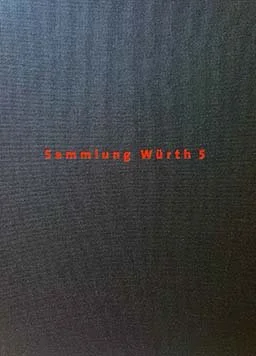
Eiblick, Ausblick, Überblick, Band 5 Sammlung Würth ISBN 10: 389929453X / ISBN 13: 9783899294538
Allegretto
Solo Exhibition – Galerie Wittenbrink – Munich – 25.3.-7.5.2023
The beauty of a jump
Every leap is a short self-made flight. Lifted by one's own strength. Moving through the air. Jumping, flying, landing. But in these painting, the place to land is missing, and one sees little environment other than the fine blue air. The flight is extended but only through the medium of painting, not through the jump itself, which would end somewhere.
Thus, the painting remains open, making the jump, which in reality would be quickly over, a metaphor. The jump as a metaphor. We all jump constantly. Can't or won't do anything else. Jump into risk, experience, to a new quality, to our detriment.
In these paintings, there is beauty. Three types of beauty: The beauty of the jumping people, the beauty of their movement in controlled flight, the beauty of the artistic rendition. Characteristics of beauty are balance, harmony, symmetry, regularity, clarity, and perfection. There are associated features such as lightness, cheerfulness, and composure. When form, content, and artistic intent come together harmoniously, an image becomes beautiful. If this succeeds, nothing needs to be excluded: stairs, whirls, honeycombs, and a cube can float together on one picture. On another, suggested walls and doors, the projection of a woman, and blossoms come together. The rule-free beautiful demands comprehensive requirements of art and perception.
The image of a hand with a ball on a smooth surface appears strange and strangely plausible at the same time. The hand, painted as an individual hand, is isolated and thus becomes the hand in itself, a part of the human being who holds something, grasps it, and, linguistically derived, understands something. Accordingly, the three-dimensional hand leads to the two-dimensional background. Even the ball it holds appears to swing between three- and two-dimensionality in some passages. Thus, between reality and abstraction. Between the diversity of appearances and the conceptually formed concept.
The yellow-saturated background recalls applied gold, which, not smooth, is therefore streaky, crumpled, glittering, old, and spotted, consciously used and preserved for a long time. In this sense, it is precious.
The motif itself confirms the valuation. It is about preciousness conveyed through extreme simplicity. The ball, in turn, a basic shape of the sphere, because of its symmetrical appearance on all sides, carries a pattern familiar from the circus or the zoo. Seals juggle with such balls there. Thus, the perfect body is also a toy. It bears a widely visible and identifiable pattern. It is clearly segmented and, in its two-tone color scheme, presents pure colors and clear contrast. Contrasts also exist with the hand and the background. Although painted together and united in the image, the individual parts form a contrast to each other. The ball has a geometric pattern and is therefore visually distant from the naturally structured and correspondingly painted hand. Another distance exists to the background, which denies all spatiality in a straight and monochrome manner. Nonetheless, there is a strange shading around the hand. The hand, it seems, is painted into the background. It is embedded in the gold-simulating yellow. Although it is painted realistically and cannot merge with a background as a real hand can, it still does. As a result, it becomes entirely color, which can easily establish connections with other colors.
Similarly, the picture with a yellow tulip has a similar effect. The flower is diagonally cut on the short stem and thus bodyless like a portrait bust. Yellow folded petals with angular folds that make them almost prism-like form a flower head that is slightly tilted to one side as if it wants to
The painting with the yellow tulip presents a similar effect in a different manner. The flower is slantedly cut on a short stem, giving it a headless, portrait-like appearance. The yellow, pleated petals with their angular folds create a flower head that tilts slightly to the side, as if it were posing for a painting. The background, light at the bottom and progressively darker at the top, has been worked, shaped, and layered to accentuate the presence of the cup-shaped flower in the foreground. This flower shares and exchanges shades of yellow with the background, including white-yellow, green-yellow, cadmium yellow, and other unnamed hues.
The artist wrote a philosophical work at the end of her studies in Verona. She devoted herself to the design of the utopian city in the book "Christianopolis," which Johann Valentin Andreae published in 1619. Her artistic work, however, which is guided by philosophical theories, can be understood as an aesthetic utopia that designs color and form with care, remaining rooted in the sensual and the intellectual rather than being actively useful.
Heike Endter
2023
2022 Der Zukunftsnavigator
Wissen und Wissenschaft - Vertrauen
Zwischen deep fake und deep truth
Murmann Verlag
ISBN 978-3-86774-709-7
In Deutschland neu denken
2021 Der Zukunftsnavigator
Ganz schön stark
ROMAN-HERZOG-INSTITUT
Murmann Verlag
ISBN 978-3-86774-671-7
2020
Der Zukunftsnavigator
Ein leuchtender Futurpfad
Roman-Herzog-Institut
Murmann/Haufe Verlag
ISBN 9783648-135655
Portrait C. Gallmetzer
Der künstlerische Kosmos
KUNST-BOESNER
APRIL 2018
Matthias Kampmann
siehe nebenstehender Text
Vanishing,
Athesia 2010, Bozen
Texte: Bettina Blumenberg, Donata Wenders
Körper, Licht und Gegenwart
2005, Atheist 2005, Bozen
Text: Jochen Meister, Pinakothek der Moderne, München
All-Eingang,
Del corpo umano e della sua presenza-assenza
nella pittura di Christine Gallmetzer
1999 Athesia, Bozen
Text: Ivana D'Agostino, Rom
Portrait C. Gallmetzer
Der künstlerische Kosmos
KUNST-BOESNER APRIL 2018
Matthias Kampmann
Kurzinterviews Roman Herzog Institut München 2020
https://www.romanherzoginstitut.de/index.php?id=178
Momentan - Ausstellung Schloss Kastellbell 2022
Prof. Dr. Bernhard Maaz
Turmspringer im leeren Raum und leere Stühle im Raum – Christine Gallmetzer bietet visionäre spirituelle Seherfahrungen, die häufig im Alltag verankert scheinen und doch eine irritierende Sicht haben, etwas Transitorisches, Faszinierendes. Die weit gefächerte Werkschau in Kastelbell zeigt unter dem Titel
„momentan“ anhand einer kleinen intensiven Gruppe ihrer Gemälde, wie die Künstlerin mit Denkbildern eine produktive Verunsicherung generiert. Die Schönheit der Turmsprünge ist eine radikal flüchtige, und unsere Wahrnehmung wurzelt im Moment.
Die Räume der Ausstellung stehen jeweils unter einem eigenen Motto:
Ein Jockey fegt im ersten Saal durch ein Museum – ein tiefgründig Irritierter Moment. Diverse Schwebende Zustände des zweiten Saales zeigen ruhende ungenutzte Stühle; wo sind die Personen dazu, woher und wohin hingegen bewegt sich die Figur in Fly me to the moon?
Als Transitorische Momente einer inneren Wandlung muten die Gestalten an, die im dritten Raum aus dem Rahmen treten, aus dem Orbit aufscheinen, im Museumsraum umherirren, auf namenlosem See im Schlauchboot filmen. Geometrische Formen dominieren den vierten Raum, sie sind rational anmutende Chiffren
einer Verrätselten Welt, in der das Sehen und die Welterfahrung reflektiert werden. Unter dem Begriff Die reine Figur stehen
die Turmspringerfiguren des letzten Raumes, Gestalten von atemberaubender Perfektion ihrer Performance, ihrer Sprünge, ihres unentwegten Schwebens im Raum. Philosophische, nicht nur ästhetische Fragen
werden durch die Gemälde von Christine Gallmetzer aufgeworfen, die sich sowohl auf abstrakte als
auch auf figürliche Bildtraditionen bezieht und dabei ihren sehr eigenen Stil entwickelt hat, der zugleich über den Moment hinausweist.
The Captured Sky (Christian Philipp Schoen)
It is undoubtedly difficult to define our place in the universe. It is not even certain that we have one.
Dr. Jonathan Butterworth, professor of physics, London/Geneva
Heaven used to be a place. It was the realm of good. It was the seat of the gods, the destination of the dead. In bygone times, the metaphysical dimension was understood in architectural terms, as is evident from the expression “the vault of heaven”, or firmament, which is still used nowadays. The sacred architectures of different eras can be understood as manifestations of the celestial sphere. Heaven could even serve as a metaphor for a utopian society, as the image of an ideal spherical city.
Heaven is no longer a place. Its spiritual aura has dissipated. Our enlightened view of existence has not spared heaven. It is no longer a destination, but a path to traverse. Air travel, as well as the fireballs of space rockets, demystifies the sky, as do satellite images of the Earth taken from orbit. Man has conquered the long-orphaned throne of the gods and can now look down on himself.
Christine Gallmetzer’s series “The Captured Sky” operates within the push and pull between mystical significance and scientific knowledge. The term “captured” is quite noticeably loaded with ambiguity here: when applied to a subject, to “capture” is a repressive act that describes the action of a person or group restraining other people or animals. In contrast, the “taking” as well as “recording” of impressions or images seems rather harmless, more peaceful. We are therefore lulled into a false sense of security, because the phrase “captured sky” evidently refers primarily to the paintings and objects – were it not for the many questions that then come up when viewing the works. Our gaze is arrested, our attention seized.
This lattice structure, which appears in modified form in other series by Gallmetzer (cf. the star-shaped net in “Mildura” [2007] from the series “Splendid Isolation”, or the veil of vertical lines over “Louise Bourgeois” [2015] from “A 1000 Times Shoes”) and is implied in “Capturing the Sky 3”, develops a striking dominance in the other images and objects in the series. In the cloud images, Gallmetzer directs her attention exclusively to the sky. We marvel at fluffy clouds that seem to roll past the radiant blue. But this is not a characteristic portrait of the weather like the ones the British Romantic painter John Constable (1776–1837) brought us by the dozen. Gallmetzer’s sky ultimately remains just as indefinable as the people in her other pictures. It seems to embody the idea of the sky more than a scientific, analytical viewpoint. Reinforcing this impression is a white web stretched over the entire image, as if to demonstrate the impossibility of discerning the essence of that which is portrayed. “The true nature of things has a habit of hiding” – so spoke the Greek philosopher Heraclitus in the fifth century BCE. By contrast, things only exist in the twenty-first century if they are manifest, if they can be made graphically visible.
This fundamentally philosophical attitude, which eventually leads to the question of the construction of reality itself. (…)
Christine Gallmetzer’s series “The Captured Sky” explores nothing less than the question of being. With the limited resources of art, she reveals to us the maximum freedom of philosophical thinking.
About my work
I have explored many ideas and subject matter in my work, but the unifying passion in all my paintings is describing a sense of space, volume, atmosphere , arriving at a kind of real expression of the subject matter.
These same pictorial concerns govern when I am engaged in portraiture.
My 'arrival' at painting has been a slightly unusual one, in the sense that I studied philosophy. My rationale for this being that I have always loved the theoretical items of art but also the making process. Reading, doing research and thinking are still at the core of the work, but painting allows me to invent other spaces and ideas with no physical constraints.
I paint mainly in oils, applying many layers and glazes to achieve a sense of space and mood sometimes removing partly some of the layers. I keep working at a piece until I feel that I have arrived at an expression of palpable space.
My work is classically inspired and the journey to a painting can be very multi-disciplinary; often involving the construction of props . My themes revolve around ideas of aesthetics, imagination and symbolism, and archetypal and the idea of magical landscapes.
I look at paintings as portals - worlds one can visually step into and be transported and sometimes even transformed by. I believe the primary function of art is to trigger a moment of transcendence in the viewer, a sense of timeless connectedness to the universe. In short to fill one with wonder.

ISBN 978-3-85256-694-8
Folio Verlag, Wien
Text: Christian Philipp Schoen
Actually till 2025: Artist Residency, Städtisches Atelierhaus am Domagkpark, Munich